Summary:
Effective fire safety depends on trained staff, not just advanced alarm systems. This article explains common workplace failures, why generic training falls short, and what a building-specific Fire Safety Awareness Programme should include, from legal duties and prevention to evacuation, extinguishers, and fire warden training.
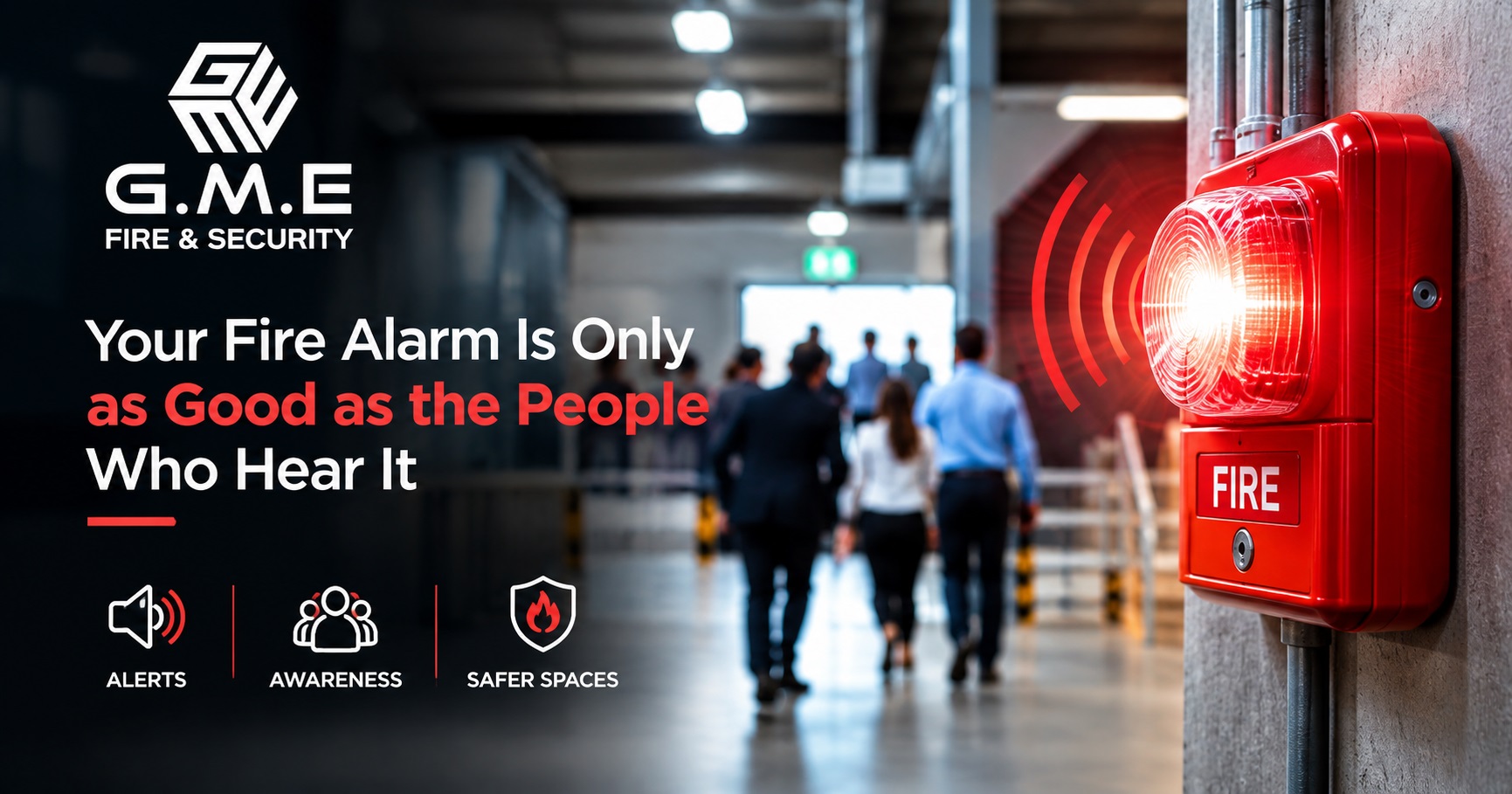
You can invest in the most advanced fire detection system on the market — multiple detector types, a fully addressable panel, instant monitoring — and it still won’t save anyone if the people inside the building don’t know what to do when it activates. Fire safety training is a legal requirement for every Irish employer. Done properly, it’s also the single biggest factor in whether an evacuation is orderly or chaotic.
What Actually Happens in an Undertrained Workplace
It’s a pattern we see repeatedly when we’re called in after the fact:
• Staff unsure which exit to use, so the evacuation is delayed while people work it out
• No designated fire warden on duty to confirm the building is actually clear
• An extinguisher grabbed and used on the wrong class of fire — making the situation worse, not better
• A fault on the alarm panel that nobody on site knew how to read or respond to
Every one of these is preventable. None of them requires new equipment. They require staff who’ve actually been trained on the systems and procedures specific to their own building — not a generic video course that could apply to any workplace in the country.
Why “Generic” Training Doesn’t Hold Up
A lot of fire safety training delivered in Ireland is exactly that — generic. It covers the legal minimum in the abstract, without ever connecting it to the building the staff actually work in. The problem is that when the alarm sounds for real, staff need to know their exit, their assembly point, their extinguisher locations, and their own building’s specific fire panel — not a theoretical example from a slide deck.
Our Fire Safety Awareness Programme is built the other way around. It covers:
Your Legal Obligations as an Employer: What the Fire Services Acts and the Safety, Health and Welfare at Work Act actually require, the role of the “responsible person,” and what a fire authority inspection looks for.
Fire Prevention Specific to Your Premises: The actual ignition sources present in your environment, not a generic list. Housekeeping, electrical safety, kitchen risks, storage — the real actions your staff can take today.
Your Fire Detection System: How your specific system works, what its signals mean, and who does what when it activates.
Extinguishers, Used Correctly: Fire classes and extinguisher types, how to identify what’s on your wall, the PASS technique, and — just as importantly — knowing when to leave rather than fight.
Evacuation, Practiced Rather Than Assumed: Your actual escape routes and assembly point, each person’s role, and accounting for every occupant.
Fire Warden Training: An extended module covering the legal responsibilities of a fire warden, sweep procedures, assembly point management, and liaising with the fire brigade on arrival.
The Business Case, Not Just the Legal One
Under the Safety, Health and Welfare at Work Act 2005, training is not optional — every Irish employer must provide it, covering evacuation procedures, fire-fighting equipment use, and prevention. Fire authority inspections check for training records, and if you can’t produce them, you may face an enforcement notice. Insurers also look for evidence of due diligence, and trained staff and documented certificates of attendance are exactly that.
Beyond compliance, there’s a simpler reason to take it seriously: it’s your own people who are in the building when something goes wrong. Training them properly is one of the most cost-effective safety investments a business can make.
What You Get
Sessions are delivered on-site, covering your specific building, your fire detection system, your extinguisher types and locations, and your evacuation procedures — for up to 20 participants per session, with additional sessions scheduled for larger teams. Each participant receives a certificate of attendance, and we provide a training record for your fire safety register. Best practice is an annual refresh for all staff, with more frequent training for fire wardens.
GME Fire & Security delivers PSA-licensed, ISO 9001-certified fire safety training on-site across Dublin and Leinster, tailored to your building and systems—not a generic script.
Frequently Asked Questions
Is fire safety training a legal requirement in Ireland?
Yes. Under the Safety, Health and Welfare at Work Act 2005, every employer must provide fire safety training covering evacuation procedures, use of fire-fighting equipment, and fire prevention. Fire authority inspections check for training records, and gaps can lead to an enforcement notice.
How is this different from an online or generic fire safety course?
Generic courses cover legal minimums in the abstract. This programme is delivered on-site and built around your actual building — your fire panel, your extinguisher types and locations, your escape routes, and your assembly point — so staff know exactly what to do in their own workplace, not a theoretical one.
Do we need a dedicated fire warden, or is general staff training enough?
Both. General fire safety awareness is required for all staff, but a fire warden takes on extra legal responsibilities — sweeping the building, managing the assembly point, and liaising with the fire brigade. The programme includes an extended fire warden module for whoever takes on that role.
How often should staff be retrained?
Best practice is an annual refresh for all staff. Fire wardens, given their extended responsibilities, should train more frequently.
Ready to Train Your Team Properly?
Don’t wait for an inspection, an insurance review, or a real emergency to find out your fire safety training isn’t up to standard. Book an on-site Fire Safety Awareness Programme built around your actual building, your actual systems, and your actual people.
Get in touch with GME Fire & Security today to schedule your session and bring your team’s fire safety training up to date. Call +353-1-9630126 to speak with our team directly.